Total Pageviews

Friday, 9 January 2026

Digital Panopticon System

 Social media is a global Panopticon. This "Generation Stack" forces the brain into a state of permanent hyper-arousal.

"Mentally exhausted but physically restless."

Your brain essentially enters a "high-dopamine loop." The human brain is being shaped by this generation’s environment.

This generation’s brain is never resting.

  • Constant social media

  • Endless social media

  • Background music all the time

  • Headphones = private stimulation bubble

  • Sugar spikes

  • Caffeine on top of fatigue

  • Too much information 

From a brain perspective, this is non-stop dopamine signaling. They are overloaded.

The brain is consuming:

  • Music + scrolling

  • Coffee + anxiety

  • Sugar + dopamine spikes

  • Content + emotions + opinions

  • News + trauma + outrage

This creates:

  • Shallow attention

  • Reduced deep thinking

  • Difficulty with long-term focus

  • Restlessness without stimulation

Sugar + caffeine + dopamine = emotional instability loop.

Brain needs regulation.

This generation lives in a chronically activated nervous system.

  • Sugar → rapid glucose spikes → insulin crashes → mood instability

  • Caffeine → blocks fatigue signals → elevates cortisol

  • Dopamine overload → emotional volatility

This world moves fast.
But not forward


This weaken your mesolimbic dopamine system.

Addiction happens when three things combine:

1️⃣ Fast reward

2️⃣ High intensity

3️⃣ Repetition

Social media, sugar, caffeine hit all this three.

Over time:

  • Normal life feels flat

  • Motivation drops without stimulation

  • Craving increases

  • Control weakens

Drugs are powerful — but limited.

Modern digital stimuli:

  • Are infinite

  • Are socially reinforced

  • Are portable

  • Are personalized

  • Never fully satisfy

The mesolimbic system is being trained all day, not occasionally.

The brain learns:

“Relief, meaning, connection, excitement come from outside — instantly.”

This chronic dopamine overstimulation will weakens brain prefrontal control. Increases impulsivity and anxiety. Reduces long-term planning execution. Lowers emotion frustration tolerance.

So, remember to have control of yourself living in this digital world. Take care of your brain, emotion and physical health. 

Monday, 5 January 2026

Happy new year?

2026 is no longer an era for empty fantasies.
We are living in the age of AI.

Why AI? Because technology keeps advancing with the promise of making life easier. So use AI wisely—don’t let AI be the one using you.

The 1990s were the era when people first started using the internet. In the 2000s, the America became the main source of global entertainment—music, movies, computers, Google, and much more. In many ways, today’s world still revolves around America. It must be nice to be American; they became the center of the world.

In the early 2000s, everyone competed to appear on the internet after the TV era. The internet allowed people to see behind-the-scenes content, especially about their favorite celebrities. But today, there is no longer a clear difference between celebrities and ordinary people. Anyone can become their own celebrity on their own platform. Everyone can be popular now.

The difference between the early internet era and today is huge. Back then, the internet came through computers. Now, the internet lives in our phones—24 hours a day, attached to us. You can feel how much the world has changed.

And now, another transformation is happening: AI.

So where is AI taking the world next?

The AI era is an era of precision. There is no need for unrealistic fantasies that lead nowhere. AI can calculate, measure, and test whether your ideas are realistic or not. Probability alone is no longer enough—AI can help compute everything.

So stop wasting time.
Stop living in fantasies in the age of AI.
Be realistic for 2026.


When it comes to changes in human personality from the 2000s to the 2020s, it is honestly a little scary. Our lives are now deeply attached to gadgets. Everyone is looking at the same things on the internet and doing things the same way—copying what they see online.

So if you move slowly, or if you do things differently from the internet trend, it can feel frightening, like you are being left behind.

Today, our emotions are increasingly influenced by machines. Because of that, humans are becoming less attached to real human relationships. We rely less on people, because our gadgets have become our world. They entertain us, comfort us, distract us, and even help us cope.

We no longer crave love the way we used to.
We crave connection to the internet.

One more thing—depending too much on the internet and AI can actually challenge our own emotions. AI is still a machine, a robot. Yet even without the internet for just one day, many people already feel extremely anxious. When a phone is not in our hands, there is a deep sense of emptiness.

We are slowly placing too much emotional expectation on AI. And when AI cannot do what we want, we start to feel angry, frustrated, or deeply sad—forgetting that it is just a machine.

Honestly, imagine the generation that grows up with AI from the start. Will they see AI as human? It’s exhausting just thinking about it.

Over time, humans are losing the ability to regulate their own emotions, because we are overly dependent and emotionally attached to one thing to keep us constantly happy.

That is why the internet era is the era of dopamine overload. Even without AI, it was already difficult for humans not to become addicted to the constant dopamine supplied by the internet.

This is why people today are so easily anxious and restless. Their minds are crowded with endless stimulation, endless comparison, endless noise—when in reality, life itself is actually quite ordinary.

The world outside is normal.
But inside their heads, everything feels overwhelming.

That's all. Just my thinking thoughts.


Monday, 29 December 2025

Welcome to 2026 : Digital world

“If you failed your life, don’t worry—there is another life in virtual reality.”

Survival as a human no longer depends only on strength or intelligence.
It now demands creativity.

The future does not reward obedience.
It rewards those who can redefine themselves.

Your creative mind becomes your new identity.

A Forecast of Future Probability

Digital identity becomes universal.
Not for convenience—but for control.

Centralized systems grow stronger because monitoring is easier than trust.
Freedom is no longer taken by force; it is logged, analyzed, and restricted.

Digital money expands.
Debt expands faster.

Wages rise slowly, if at all.
Inflation runs ahead—always one step faster than hope.

Living costs increase, especially real food.
What is natural becomes premium.
What is artificial becomes affordable.

Utilities are no longer luxuries:

  • Internet

  • Devices

  • Commute

  • Subscriptions

  • Bills

They become the minimum requirement to exist.

Work fragments.
Full-time security dissolves into:

  • Gigs

  • Contracts

  • Temporary relevance

Income becomes unstable.
Availability becomes the job.

Healthcare shifts from a right to a personal responsibility.
You don’t pay to heal.
You pay to delay collapse.

Social pressure intensifies.
Comparison becomes constant.
Silence becomes suspicious.

People stand between two worlds:

Touching grass or Touching screens

Banks, corporations, and governments grow enormous—not because they are evil, but because scale wins.

And when people struggle, they sell:

  • Time

  • Privacy

  • Creativity

  • Identity

  • Assets

First willingly.
Then out of necessity.

This is what we imagined of digital world?


The Quiet Truth

The future doesn’t kill people.
It absorbs them.

Those who cannot adapt disappear quietly into systems.
Those who can create build parallel lives.The digital world is still a world inside a system.

You survive only if your capabilities match what the system needs.

And if they don’t—
you don’t disappear dramatically.
You are simply excluded.

Virtual spaces become:

  • Refuge

  • Stage

  • Marketplace

  • Identity

Not because people are weak—
but because reality becomes unaffordable.

Then the only thing left that is truly yours is your mind.

And creativity is not art anymore.
It is survival strategy.

The future belongs to those who can imagine another way to exist—
and make others believe in it.

When society becomes fully digital,
ownership becomes real power.

No likes.
No followers.
No visibility.

Own something—at least in the real world or in the digital one.

Because those who own nothing
don’t just lose wealth—
they lose leverage, voice, and exit.

In a system-driven future,
survival belongs to those who hold value,
not those who merely participate.

That’s the rule.

So the rules are simple:

Pay your debts.
Debt is not a mistake—it is a trap.

Hold real assets:

  • Gold

  • Small land

  • Property

Strengthen your health.
A weak body is an expensive body.

Grow your own food, even a little.
Food security is freedom.

Freelance is not a trend—it is the future of work.
Jobs are rented.
Skills are owned.

Start investing early.
Time is the only unfair advantage.

Have skills that work without permission.

Build your own community.
Systems fail.
People carry you through collapse.

That’s all.

No ideology.
No rebellion fantasy.
Just preparation.

Good luck with your future.

Friday, 29 August 2025

It's okay to slowly dying in winning

It’s okay to slowly die while you’re still winning.

This world is corrupt—
leaders, systems, power structures.
They don’t want humans.
They want control.
They want obedience.
They want to play god.

Villains will fall.
They always do.

But us?

Let me tell you something.

The world ain’t all sunshine and rainbows.
It’s a mean, nasty place.
And it doesn’t care who you are.

So the real question is—
how tough are you?

This world will beat you to the knee 

but it ain't about how hard life getting to you

but it's about how hard you can be at it

It’s about how hard you can get hit
and still get up.

Still breathe.
Still stand.
Still move.

That’s how winning is done.

So no matter how broken, tired, or scarred you are—

KEEP. MOVING. FORWARD.


Tuesday, 5 August 2025

A Fata Morgana (Italian: [ˈfaːta morˈɡaːna])

Return to God,
the Light of life.

For that is the condition
of true happiness in this world.

Obstacles are overcome
through lived experience,
not empty desire.

The rapid current of the world
sweeps away the careless.

Its beauty is a mirage,
crafted to deceive
those who seek power.

We are chased by endless shadows,
until there is no world left to pursue.

The world is so beautiful
that humans begin to act like gods.

Wealth and desire weaken the soul.
Without faith in our hearts,
we are easily dominated.

The devil and lust
are the hidden enemies.

Be patient on the road.
Keep faith in your heart.

Faith is the savior
of this troubled world.

And remember—
the afterlife is forever.

Saturday, 5 July 2025

The world is ending

It is painful to witness a world ending too soon.

Evil is no longer hidden.
It is broadcast live, watched by millions, and celebrated without shame.
Soldiers post images of the people they have killed.
Famine continues while the world scrolls past it.
People are starved, and we are told to accept it as normal.

Food is meant for everyone—
even for enemies.
When food itself becomes a weapon,
that is not strategy.
That is the beginning of the world’s collapse.

This world is ruled by devils.
That is the truth.

Greed without limit brings destruction without mercy.
What is most tragic is not that evil exists—
but that so many are blind while still able to see.

We live in an age of excess information,
but little knowledge,
and even less wisdom.

Information without wisdom breeds arrogance.
Arrogance turns into numbness.
And numbness allows evil to continue undisturbed.

This imbalance must be corrected.

This morning, I encountered a word that made me stop.

Stop serving the noisy world.
Stop—
and listen with the heart.

RESET.

In the modern age, “reset” has become a slogan of power.
Terms like “The Great Reset” tell us the world is broken
and must be rebuilt—
economy, education, society, health—
all redesigned to be “better.”

But reset by whom?
On what foundation?
For whose benefit?

If a reset is not grounded in revelation,
If it does not return humans to nature,
If it turns people into servants of a soulless system—

That is not a reset.
That is misguidance.

Our Reset: Return to the Self

Our reset does not come from elite meeting rooms
or global conferences.

It comes from truths revealed through nature and conscience.

Our reset is not erasure, but:

  • Clarification

  • Revitalization

  • Fertilization

Our reset begins when:

  • The mind becomes clear again

  • Nature is understood again

  • The world is restored to its place—
    not as a goal,
    not as a god,
    not as a tool

The real reset does not begin in parliaments.

It begins quietly—
when a young woman wakes up
and realizes her soul has been damaged by the system she lives in.

When self-awareness gives birth to awareness of others.
When personal understanding becomes collective movement.
When a healed soul gains the strength to rebuild.

Women today—
are distorted, pressured, disconnected.
And through that, generations are damaged.

But when awareness rises,
people rise.

This reset starts with us.
With ordinary women who feel,
“This system does not fit my nature.”

With Gen Z girls who wake up asking,
“What am I really searching for in this life?”

This reset does not require titles or certificates.
It requires understanding.
It requires courage to speak truth.

This is a call to return to the original.

Nature is the map.

INDEPENDENT SOUL → UNDERSTANDING NATURE

This is not poetry alone.
This is not theory.

This is the formula
for the revival of civilization.

Thursday, 3 July 2025

Everyone losing their morality now

 To keep your morality,

you must remain human.

A human is not defined by intelligence alone,
but by the ability to feel
the suffering of other humans.

Greed, disguised as “normalcy,”
slowly erases that humanity.
And what is called mainstream today
is often nothing more than moral surrender.

We once placed great hope in the 21st century.
Instead, it arrived carrying destruction—
masked as advanced technology.

We are losing ourselves.

Was this progress meant to elevate human life,
or to push humanity toward its peak destruction?

Behind every technology
are overworked humans—
exhausted, disconnected,
living without balance or dignity.

In truth, humans do not need excess.
They need simplicity.
They need their basic needs met.
They need a life that allows them to breathe.

Many believe the mainstream must be followed
because evil appears powerful.
But they forget—
evil stands against nature,
and therefore against God Himself.

Remember this:
we are human.

Humans are limited.
Fragile.
Mortal.

When humans abandon morality,
they should no longer be called human.
Perhaps they have not evolved—
perhaps they have fallen.

Evil already has a name.
And it does not need another.

Do not follow satanism.
It lives quietly
in desire,
in greed,
in selfishness.

Even the pyramids—
symbols of absolute power—
stand empty today.

Choose morality
over power.
Over wealth.
Over dominance.

Choose morality
above everything else.

Because without it,
there is no humanity left to save.


We all are a survivor and fighter

Everyone is surviving something.

To survive, we must fight—
not always with fists,
but with breath, endurance, and will
in a world built on survival.

We never truly know
what another human is carrying.
Illness.
War.
Famine.
Financial struggle.
Loneliness.
Love.
Hatred.
Poverty or privilege—
each comes with its own battle.

But one thing is shared:
as humans, we survive.

Life is hard.
We must breathe through it.
Walk through it.
Feel through it.

What matters is not what we face,
but how we face it.

Success is not guaranteed.
Failure will come—often.
There will be moments
when we do not understand
what is happening to us.

Even if thousands before us
have walked the same road.
Even if history offers lessons.

Survival is not imitation.
It is choice.

We learn by trying.
By falling.
By making a thousand mistakes.

Through error,
we discover precision.
Through pain,
we find direction.
And slowly,
we learn where to aim.

That is how we survive.

So good luck
to everyone trying to stay alive in this world—
especially those doing it alone.

It is painful.
It is hard to witness.
But without trying,
there is no living—only existing.

Life is no longer about
getting everything we want.

It is about accepting
what comes for us—
and still choosing to stand.

That, too,
is survival.


Monday, 28 April 2025

Time to recover

I’m a 90s kid.

We lived between two peaks—
the rise of the Millennials
and the birth of Gen Z.

The difference?

Millennials learned to own technology.
Gen Z was born into the internet itself.

Compared to the Millennial era,
the Gen Z world feels rushed—
as if time moves faster than the body can follow.

Years disappear without being felt
because life now happens inside screens.

What I noticed about Gen Z
is how early life becomes global.
Imagine billions of people
looking at the same things,
judging by the same standards,
chasing the same version of success.

A global perspective becomes a global pressure.

Everyone grows up faster.
And everyone wants to become the same thing.

I grew tired of chasing the fear of missing out.

I used to be mainstream.
I used to live globally.
I showed my life online.
I consumed endlessly—
until the internet shaped my personality.

I was a hustle woman.
Chasing success so loudly
that victory only mattered
because others could see it.

Until reality arrived.

The human body has limits.
Coffee is not infinite energy.
Fast food is not real nourishment.
Money is never enough.
Shopping feeds an endless desire.
And everyone is racing to earn more—
without ever stopping to live.

I became exhausted by this life.

So I retired from it in my 30s.

I feel like I’ve experienced enough.
I chased almost everything in my 20s.
I checked off my bucket list—
and even went beyond it.

I gained experiences.
I failed many times.
I have things I’m proud of.

And yet I kept asking myself:
Was it worth it?

Human desire has no finish line.
It is never enough.

I kept wanting more,
not because I lacked anything,
but because I compared myself
to the world’s current standard.

In truth,
I already had more than enough.

So I knew I had to stop.

Stop running.
Stop chasing.
Stop performing.

To finally appreciate
the things I once prayed for—
and now take for granted.

I was angry for a long time.
Angry at dreams.
Angry at standards.
Angry at myself for always chasing.

But my soul was tired.
My body was tired.
My spirit was tired.

So I’m taking a break—
to recover.

I don’t want to lose my soul
for a future I can’t even predict.

Right now,
I need myself the most.

This is my pause.
From research.
From experiments.
From theories.
From philosophy.
From novels.
From life stories.

I hope others, too,
can step away from this world that moves too fast.

Sayonara.
Bye-bye.

It’s time to live slowly.

Sip tea.
Talk to trees.
Touch the grass.
Feel the wind.

Let the universe reconnect with you
before you disconnect yourself
from life.

Sunday, 29 December 2024

2024 is a scary year

This feels like the first real year of inflation.

So many difficult things unfolded at the end of 2024.
Unforeseen events.
Losses.
Declines.
Heartbreaks.

Yet, quietly, something shifted.

Many of us began to realize that this is a year to save.
To slow down spending.
To stop showing off lavish lifestyles on social media.

And still—everyone is busy making money everywhere they can.

The cost of living keeps rising.
Healthy food—fruits, vegetables, organic produce—has become expensive.
At the same time, corporations and capitalist systems continue to push cheap, processed food wrapped in plastic—
food that damages our health and dulls our productivity.

Slowly, we’ve begun to distinguish between desire and necessity.

But did we realize why this awakening feels so heavy?

Because living in this world now requires a lot of money.
Living as a human inside a human-made system comes with endless requirements—
and nearly all of them demand payment.

Water requires bills.
Light requires electricity fees.
Shelter requires constant maintenance.

At the peak of the 21st century,
we are humans who must consume continuously just to survive.

We own too many shoes.
Use too many lights.
Consume too much electricity.
Drink endless varieties of water.
Rely heavily on sugar.
Absorb overwhelming amounts of information.
And constantly compete with strangers online—
measuring our worth through visible achievement.

The 2000s feel like yesterday.
We were excited about phones.
Amazed by the internet.
Grateful for connection.

Then came social media.
The world sped up.

We consumed more.
We knew more.
And slowly, we all began chasing the same goals—
goals shaped by algorithms, not inner needs.

Entrepreneurship once looked like the ultimate dream.
A symbol of freedom and success.

Until reality arrived.

The hardship.
The unstable economy.
The financial pressure.

We realized that this “dream” is not meant for everyone.

We once glorified hustle culture—
until our bodies broke down,
our mental health collapsed,
and neglected basics returned as illness.

Sometimes I wonder—
am I alone in feeling that financial stress became the central problem of 2024?

Maybe it isn’t obvious yet.
But the signs are there.

This is the time to be wiser with spending.
More conscious about consumption.
More honest about what we actually need.

Because the world ahead does not look peaceful yet.

And survival—
will belong to those who learn to live with less,
not those who chase more.

Sunday, 6 October 2024

Emotion autistic

    1 in 5 autistic people have alexithymia. People who have alexithymia may have trouble identifying, understanding and describing emotions. They may also struggle to show or feel emotions that are seen as socially appropriate, such as happiness on a joyous occasion.

    Autistic children often struggle with emotional regulation. Big emotions in autism can be related to problems with sensory integration, communication deficits, and difficulty understanding social cues—and they can be hard to regulate and express appropriately. Emotional outbursts can be hard for everyone involved.

    Autistic people may act in a different way to other people. They may find it hard to understand how other people think or feel. find things like bright lights or loud noises overwhelming, stressful or uncomfortable. get anxious or upset about unfamiliar situations and social events. They take longer to understand information and common sense.

    They tend to process emotions more intensely and may have difficulty expressing them in ways that are deemed socially acceptable. For example, an autistic girl may have a blank facial expression, leading others to believe she is cold or uncaring when she is actually experiencing intense emotions.

    "Just because I struggle to put how I feel into words it doesn't mean I don't feel things. In fact, the worse I feel, the more I struggle and often default to, 'I'm fine'."

    Autistic people may lack the ability to recognize and label emotions, and they may have difficulty responding to social cues. This can vary from individual to individual. Cognitive empathy can be taught, so it is possible for autistic people to learn empathetic behavior. Other therapies may improve emotional empathy.

    For some autistic adults, emotions do not show, either on their face, in their body or in their tone of voice. The fact that autistic people experience the full range of human emotions, including love, is indisputable. Many autistic people are observant and have excellent attention to detail of understand emotion.

    Because of their difficulty in regulating their emotions, they are more likely to move to an extreme emotional state, such as a meltdown, at times. There can also be the social pressures of responding differently in terms of emotions compared with others sharing the same experience.

    Someone with autism may not show any signs of grief at a funeral. Similarly, they might say they are feeling calm when they are showing physical signs of agitation and alertness. To other people, this might appear confusing and untrue. Autistic people may act in a different way to other people. Normal people will find it hard to understand how this autistic people think or feel. Because this people take longer to understand basic information and impression. 

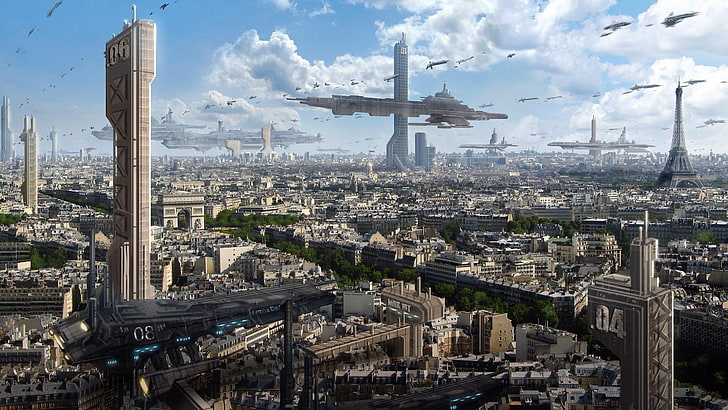
Metropolis


 You see all this picture? 
How you see it?


In the past, I was proud of the city I lived in.

I was proud of its speed.
Its advanced technology.
Its endless amenities.

I dreamed of living in a developed, busy city.
I loved doing things that only cities could offer.
I am Gen Z—
so I believed my life had to be in the city.

New buildings kept rising.
New shops kept opening.
Everything felt exciting.

But after ten years of exhausting life and work in the city,
I became deeply tired.

Every day felt like chasing life itself.
Mornings began with coffee.
Meals were fast food—
not because we wanted it,
but because time moved too fast
and work never seemed to end.

At first, this felt normal.

Then my health began to decline.

I was constantly exhausted.
Easily stressed.
Burned out.
My thoughts became chaotic.
I cried without knowing why.

I started observing the people around me.

Every morning, we chased trains to get to work.
We ate quickly in restaurants
because there were always more places to go.
We shopped constantly,
yet the list of things we wanted never ended.

We ate desserts every day
to feel a moment of happiness—
but that happiness faded quickly.

We followed trends.
We bought new clothes again and again,
even though our closets were already full.

Then I became truly sick.

That was when I decided to go home.

My home is in the countryside—
not in a big city.
My favorite shops don’t exist there.
There is nothing trendy to show online.

But the food is fresh.
Home-cooked meals are warm.
They restore something deeper than energy—
they refresh the soul.

I fell in love with the sounds of nature.
At home, silence feels alive.
In the city, the noise was so constant
that I needed artificial white noise just to feel calm.

Only then did I understand:

The life I once loved
was the life that made me sick.

There was always too much to do.
Too much to have.
Too much to chase.

I felt drained by a temporary life
that never truly satisfied.

So I quit.
I returned to the basics.

We need a life that does not steal our soul.
We need to live with our soul—
not trade it away.

Don’t sell your soul for status, speed, or approval.
It’s okay to stay in your comfort zone.
Because sometimes,
while chasing what everyone else is doing,
you lose everything that truly matters.

Metropolises and megapolises
are not the life we actually need.

What we need is:

  • Warm, home-cooked food

  • The sound of nature

  • A simple, ordinary life

  • A loving family

  • And a soul that still lives peacefully inside the body

That is real living.


Tuesday, 5 March 2024

Our world

Hi, and hello, March 2024.

Time moves so fast
that it becomes easy
to lose ourselves
in this busy world.

So I want to ask you—

Do you feel your existence?

How do you feel it?
Can you explain it?

Do you perceive the world first—
or do you perceive yourself first,
and only then the world?

How would you describe that moment?

Can you see the world
beyond what the eyes can capture?

Can you feel existence
beyond what the hands can touch?

Can you taste your being
beyond what the tongue can sense?

Isn’t that strange?

Are the five senses—
our proof that we exist?

Or are they only tools
to interact with something deeper?

What about the soul?

Do you feel your existence through the soul?

And if so—
how do we prove it exists?

When we die,
where does the soul go?

We leave everything behind—
our body,
our possessions,
our names,
our achievements.

So what remains?

Only the soul?

This world feels heavy.
Sometimes it feels like misery.

And perhaps the highest knowledge
we can reach in this life
is not how to control the world—

but understanding why we exist within it.

Tuesday, 9 January 2024

MYTHS AND MISCONCEPTION

HELLO. IT’S A NEW YEAR.
And somehow… it’s already 2024.

When I was a child,
I imagined the future differently.

I thought 2020 would arrive
with flying cars,
a happy world,
and technology that truly made life better.

But the world that came
was chaotic.
Messy.
Broken.

Yes—this is a world of advanced technology.
Everything is easier now.

With a single phone,
you can buy anything,
order transport,
work,
attend classes,
replace television,
video call,
message,
and connect with people across the globe.

Today, the basic requirement for life
is no longer food or shelter—
it is a phone and internet.

And if you have those,
you are considered “alive.”

But look at the timeline:

2020 — a global pandemic.
2021 — mandatory injections and division.
2022 — economic collapse.
2023 — war in Palestine.
2024 — bunkers, fear, preparation for disaster.

What did all this technology and globalization really give us?

After everything,
people became cautious, suspicious, fragmented.

There are the paranoid.
The anti-vaccine.
The preppers.
The capitalists.
The governments.
The victims of war.

And here is the misconception:

“If you have a bunker, you will be safe.”

That is a lie.

In war, governments control movement.
Men are sent to fight.
Evacuation is ordered.
No bunker protects the soul.

I now see that much of this chaos
was built long before.

Between 2017 and 2019,
we were taught to hustle.
To become entrepreneurs.
To chase financial freedom.
To turn content creation into identity.

We were trained for a rat race
disguised as ambition.

Twenty-four hours were never enough.
There was always more to monetize,
more productivity to prove,
more success to display.

Everyone chased the same dream
they saw online.

We even gave it a name—
FOMO
the fear of being left behind
in a globalized world.

But this life is not fulfilling.

It is easier to eat fast food
than sit together for dinner.
Family tables disappeared.
Home-cooked meals vanished.
Conversations faded.

People isolate themselves
inside their phones.
They connect deeply with strangers online
while drifting away
from the people beside them.

We are sicker now.

Hospitals are always full.
New diseases keep appearing.
Masks became normal.
Distance became habit.

I realized something painful:

Fast food made me tired.
Lethargic.
Emotionally empty.

I missed warm food.
I missed my mother’s cooking.
I missed nourishment that carried love.

It is easier to develop mental illness
when your body is fed junk.

Now I understand
how important real food is.
How essential home-cooked meals are.

Fast food is not food.
It is synthetic fuel—
chemical, toxic, cheap,
designed for profit, not health.

Our immunity weakened
because our food lost its life.
Medicine and supplements replaced nourishment.
Plastic replaced soil.
Profit replaced care.

A technological world promised happiness—
but delivered distance.

Food lost its soul.
Humans lost connection.
Technology built more weapons
than solutions.

War now has no rules.
Machines make killing easier.
Genocide against the weak
is normalized.

This is not the future I imagined.

I don’t hate life.
I hate what we turned the world into.

And maybe that anger
is not destruction—
but grief
for a world that could have been better.

IHATETHISWORLD

Saturday, 2 December 2023

World War

The world we live in today.

I still cannot believe that in the 21st century
I am witnessing genocide—
live,
with my own eyes.

I hate war.

Since I was a child,
war has never stopped.
Soldiers killing women and children.
Innocent people targeted.
Babies killed.

This is not accidental.
This is not “collateral damage.”

Civilians are deliberately targeted.
War machines are designed
for mass killing of the defenseless.

And now, there is no shame left.
Genocide is committed openly,
in front of the world,
broadcast without remorse.

These are the same people who once said:
“We will never repeat World War I.”
“We will never repeat World War II.”

They said they had learned.
They said the suffering was enough.
They built museums to remember their darkest history.
They told the world:
Never again.

I believed them.

I believed that remembrance
was meant to prevent repetition.

But I was wrong.

After World War II,
they did not abandon violence.
They refined it.

They built more weapons.
More efficient machines.
More sophisticated ways to kill.

They competed to create
the most powerful instruments of destruction.
They were proud of them.

And they called it technology.

This is the 21st century—
a world overflowing with technology.

The same nations that sing anthems
for fallen soldiers,
that hold remembrance days,
that vow never to forget—

are the same nations
that attack others
in the name of
“defense,”
“security,”
and “alliances.”

I do not understand this contradiction.

So I ask a simple question—
not as an accusation,
but as a human being:

Why do men love war?

Is my question to the world

Wednesday, 25 May 2022

The second outbreak

The humans are outraged.

Viruses from monkeys, cats, and dogs.
The seas are toxic.
Even the chickens are no longer healthy.

Where are we going?

I think now is the time.
The battle to survive has begun.

We live in two worlds at once:
the good side and the bad side.
Everyone acts in their own world, separately.

But when balance is lost,
the two worlds collide.
And the question becomes:
Which side will dominate?

I pray for a world where we are no longer afraid of the bad.
A world where we can live and act freely.
A world with leaders capable of wise decisions.
A world where people stop judging each other
and respect the individuality of others.

Let us hope that whatever happens,
we will make it to the end.
We are fighters.
We are warriors.

The world we share must be built with kindness,
not with hatred or racism.

Heroes often come late,
because the early ones were villains.

Beware of leaders who say,
"I want to change the world."

Instead, follow the leader who says,
"I want to live in this world."

It is no longer about washing our hands.
It is about being ready.

The world is changing.

If we survive, we will evolve.
History has shown it:
the world is dominated by bad people
until one person emerges—
the true, the strong, the righteous.
Then the world changes.
Then it evolves.

Learn from history.
Learn how empires rise and fall.
Learn how civilizations transform.

And remember:
survival is not just physical.
It is moral.
It is the courage to stand in a world of chaos
and insist on what is right.

Saturday, 5 March 2022

Penyakit akhir zaman

World-End Disease

The end of the world will not come by itself.
Humans are bringing it upon themselves.

We are becoming ignorant.
Rebellious against knowledge.
Unwilling to learn.
Stubborn beyond reason.

Let me explain.

Just as humans have four types of blood,
we can imagine humans having four types of understanding.
Some grasp the world through theory and concepts.
Some through logic alone.
Some through practicality.
Some through moral values.

We are all different.
We cannot all think the same way.
The strongest teams, the strongest civilizations,
are built from individuals with unique perspectives.

And yet, humans are failing.
Failing because of stupidity.
Because of ignorance.
Because of a lack of awareness.

Survival depends on knowledge.
Knowledge allows us to remain alive,
physically and morally.

Have you noticed the younger generations?
Sometimes they seem rude.
It’s not just attitude—it’s lack of empathy.
Lack of wisdom.

Empathy is not simply feeling.
It is the ability to understand others,
their situations, their ideas.
To listen without immediately judging.
To accept knowledge that differs from your own.

But today, we are becoming rude—
rude to our parents.
Rude to our environment.
Rude to governments.
Rude to our own bodies.

When we refuse to listen, we cannot learn.
And without learning, change is impossible.

This world is moving toward an end—but not yet.
There is still time.

What we must do now
is cultivate the ability to understand.
To see beyond ourselves.
To respect differences.
To be aware.

And a word of caution:
a great leader is not the one who claims they want to “change the world.”
The truly great leader
is the one who wants to live in the world,
to understand it,
and to care for it wisely.

Trust that.

Thursday, 11 November 2021

The Probabilty of 2022.

Hi, everyone.

2021 is coming to an end soon.
So, what have you achieved this year?

Got a job? Finished school? Graduated? Got married? Have children?
I hope all is well for you.

2020 hit all of us hard.
It left us in uncertainty and hopelessness.
2021 has been somewhat better, right?

If you’ve been vaccinated, you might feel secure, ready for new ventures.
But if you refused, life became harder and unfair.

Choose your battles wisely.
Every decision you make should be calculated, with the possible outcomes in mind.
This era of global vaccination may divide humanity into two types of survival.
So think carefully, and prepare your countermeasures.

The reason I’m writing this is simple: probability matters.

With 2021 ending, many of us feel relief.
We return to work, school, and travel.
But don’t be fooled.

This is the best time to learn from the past.
We’ve survived two years of a pandemic.
If you’re still standing, take a moment to understand the lessons it offers.

The pandemic is not over.
The virus is still alive.
You may have grown used to it.
The vaccine works—but life is not automatically successful or easy.

Who is getting rich? Who is thriving?
Not everyone.

That’s why preparation is essential.

Survive, thrive, and protect yourself:

  • Have savings.

  • Learn survival knowledge.

  • Practice hygiene.

  • Don’t lose hope.

For 2022, make changes in yourself:

  • Take care of your health.

  • Lose weight if needed.

  • Take care of your loved ones.

  • Eat the food you love, enjoy life.

  • Travel, experience the world.

  • Save money. Invest. Create multiple income sources.

  • Protect valuable things.

  • Reduce weaknesses.

  • Be a game-changer for yourself.

  • Stop complaining—start solving.

  • Read books, have ideas.

  • If you are wealthy, help your community survive too.

Prepare for the worst, but live fully.

Remember: 2020–2030 is not a decade to relax.
It is a battle to survive.


Tuesday, 7 September 2021

The 'X'

Her chromosome is adopted in to the different place. The humblest place. The lowest place that denied their existence. But, her original chromosome is the strongest chromosome in the world yet she being nurtured as soft as she can.

Because of unknown origin of her, thus she being classified as an 'X'.

Sunday, 29 August 2021

The Little Girl, Uti.

 The Grown-Up Has Become a Weakened Man

I have always wanted someone to share my story with.
But the world has grown too adult.
No one is satisfied with where they are.
Everyone is chasing… nothing.
We call it the “life plan.”

The minute of the hour, the hour of the day,
the day of the week, the week of the month,
months of the year, the year of your life.
Microscopes, biology, curriculum, arithmetic, history, grammar, priorities—
so much to accomplish, every second measured,
every decision weighed.

Wake up. Coffee. Breakfast. Study. Work. Repeat.
Understand the market, the economy, the future.
We are told to become the “wonderful grown-up,”
but in doing so, we make ourselves robots.
And then, we make robots of our lives.
The future requires this, they say.


But once, there was a little girl who lived on the moon.
She needed friends. She needed emotion.

Her life was lonely. She had no heart, no mouth, no brain, no body—
only a pair of eyes.
Eyes to see.
Eyes to observe.
Eyes to absorb everything.

By her 25th birthday, she learned to pilot herself.
She had achieved everything—but not a heart.
She could not feel.
She could not connect.
She needed friends to give her one.

So she descended to Earth.
Traveling through spaceyards and skies,
she explored humans, animals, places, subjects.
She learned everything she could.

Until she crashed.
The world’s problems forced her to land,
to face reality.
She could see the roots of human suffering,
but she had no friends.
It was cold—inside and out. Lonely and empty.

So she drew.
She drew humans and the roots of their problems.
When a problem overwhelms you,
you must understand its root to disobey it.
But she had no power.
No strength to even draw.

Yet she forced herself.
First she fell sick. Then she aged.
But her imagination endured.
She pictured herself.
She calculated.
And suddenly, the Unimax emerged.

The Unimax gave her power.
She imagined the grass, flowers, concrete, castles.
She imagined things flying—and herself, flying.

She wanted to prove she existed.
The Unimax promised she could solve problems.
But there was a cost:
power is greedy.
To wield it, she must endure everything that comes with it.
Only then could she hope for friends.


Will she endure it?
Will she find friends?
Will anyone listen to her?
Will she solve the problems?
Will she finally have a heart?

No one knows… yet.